Morning Coffee: The wrath of Goldman Sachs' CEO, David Solomon. McKinsey & Co’s safe jobs succumb to market forces
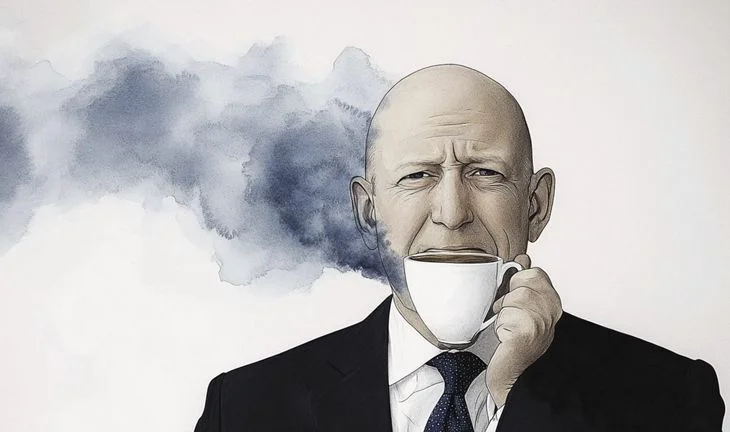
There’s a famous proverb among traders - “being wrong is inevitable; staying wrong is unforgivable”. What’s less well known is that there is an exact equivalent of this for boardroom politics. Disagreeing with the CEO is unavoidable and often a good thing. But after a point, continuing to disagree, particularly if you do so publicly, is going to raise the question of “what are you still doing here then?”
Get Morning Coffee ☕ in your inbox. Sign up here.
According to an extremely thoroughly reported article in the WSJ about Goldman Sachs, this might have been part of the story of Jim “Espo” Esposito’s growing “feeling of merely going through the motions”, which caused him to resign from Goldman at the start of 2024. Espo had never been a fan of Goldman’s move into retail banking, and apparently had a number of "testy" moments and sit-down meetings with CEO David Solomon over the course of 2022 about a memo he’d written on the subject.
Although Espo won the battle (Goldman did, in fact, stop investing in Marcus and sold GreenSky), it seems that by the end of 2023 he’d lost the war. Solomon didn't like being criticized and Esposito in turn “didn’t like the feedback he got” from conversations about whether he was on track for the top job. Shortly after that, Espo left to go to Citadel Securities. He wasn't the only one. The WSJ says commodities trading head Ed Emerson’s departure from Goldman in 2023 might also have been partly a result of excessive venting against the consumer business and the voicing of a thought that Solomon should be replaced by John Waldron while at a partners' dinner.
Part of the problem might have been that as well as feeling embattled by a string of poor earnings announcements, Solomon was unhappy about the fact that every single grumble expressed internally seemed to end up in the newspapers. The WSJ says there were investigations into a number of senior executives and even partners as a result.
Eventually, the tide turned. The 2024 revenue recovery meant many fewer executives grumbling, and much less of an audience for those that did. Whereas a few years earlier, Solomon had reportedly been reduced to “yelling at” partners who announced their intention to leave, he now felt pumped enough to tell the board that they had to do whatever it took to keep Waldron when he threatened to leave too. A measure of how much Solomon seems to value the loyalty of his top lieutenant (who could quite possibly have taken his job during the worst low points of the 2022/3 dip) is the rather touching response he apparently made to hearing that Waldron had been interviewing at Apollo; “You can’t do this to me”.
There appear to be three main lessons to be learned from the WSJ's scrutiny of Solomon's reign. First, that nothing succeeds like success, and bankers change their minds with revenue conditions. Secondly, that as every TV viewer knows, “if you come at the king, you’d best not miss”. And finally, that in investment banking as much as any other walk of life, an under-rated superpower is the simple ability to keep one’s mouth shut.
Elsewhere, you could say that nobody ever gets fired from a blue-chip management consultancy like McKinsey & Co. People either succeed, or “depart for exciting new opportunities”. But it seems that, having massively staffed up during the pandemic, McKinsey has found itself heavily overmanned in the current environment.
It doesn't help that consulting firms, like banks, are experiencing unprecedentedly low levels of natural attrition through employee turnover; there aren’t many jobs to go to, and people are unwilling to take career risks. So in order to reduce its headcount by 10% (the biggest cuts in the firm’s history), the Financial Times says that McKinsey has had to not only issue redundancy notices to 1,400 back-office staff and 400 data and software engineering specialists, it has … used the annual review process to encourage some of its consultants to perhaps consider external opportunities which were slightly less exciting than they might have hoped for.
If things go on like this, McKinsey may even end up having to fire people in ways that can’t be euphemised. The problem appears to be the original decision to over-expand, as rival firms like BCG are still hiring in order to take advantage of new opportunities in AI. If only there had been some expert advisors who McKinsey could have consulted before making such a big strategic move.
Meanwhile …
Jim Esposito may be reflecting on other trading maxims like “it’s better to be lucky than good” and “a strong market makes geniuses of everyone”, as Citadel Securities has taken advantage of volatile conditions to deliver trading results up 70% on last year. (FT)
Michael Grimes has left Morgan Stanley to be executive director of the US Investment Accelerator, a program to encourage foreign investments. This might allow new opportunities for his unique methods of landing clients. (Business Insider)
“Dividend swaps”, a slightly obscure corner of equity derivatives trading, has become unusually hot as US banks and hedge funds have begun to take more of an interest in a previously European-dominated market. (IFRE)
Danske Bank is hiring in Sweden, where its local boss Carl Rosenius feels like he has picked up “a very good team in equity capital markets” and wants to take share. (AM Watch)
Goldman Sachs continues to grow in Europe, with employee numbers up 14%, revenue up 12% and total compensation up 12% in its most recent subsidiary accounts. (Financial News)
Marc Rowan of Apollo has a “state of the art septic system”. It’s installed in Duryea’s, the restaurant he owns in the Hamptons, and it required special action from the New York State Supreme Court to get the permits to install the system in time to open for the summer season. (NY Post)
And if you’re thinking of heading up to the Hamptons for a “perfect girls’ weekend”, the investigative team of the Wall Street Journal has come up with the startling scoop that there are a lot of extremely expensive things to purchase there. Although most of them appear to be less consumer goods than commodity inputs to the Instagram content creator industry. (WSJ)
Have a confidential story, tip, or comment you’d like to share? Contact: +44 7537 182250 (SMS, Whatsapp or voicemail). Telegram: @SarahButcher. Click here to fill in our anonymous form, or email editortips@efinancialcareers.com. Signal also available.
Bear with us if you leave a comment at the bottom of this article: all our comments are moderated by human beings. Sometimes these humans might be asleep, or away from their desks, so it may take a while for your comment to appear. Eventually it will – unless it’s offensive or libellous (in which case it won’t.)